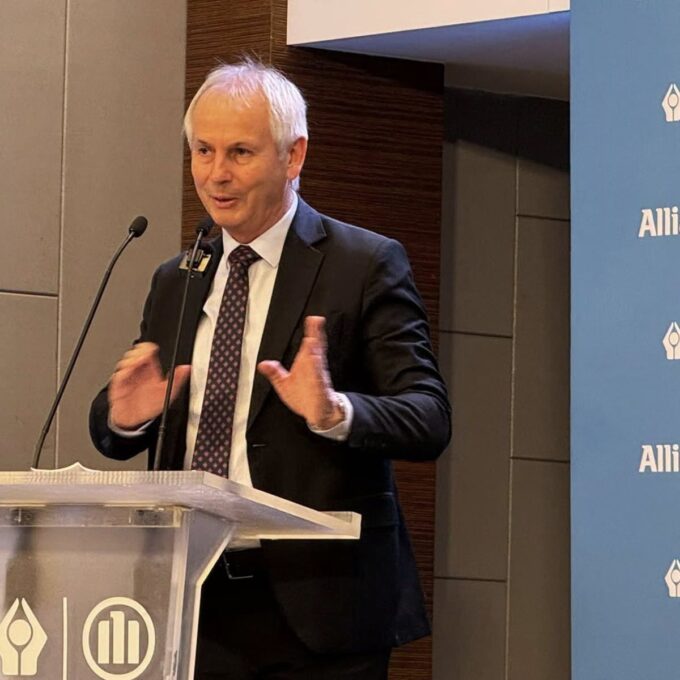

Chief of Staff and Chairperson of the Botswana Social Programmes Task Team, Dr Oupa Tsheko, says Botswana spends about 4.4 percent of its Gross Domestic Product (GDP) annually on social protection programmes, placing the country among the highest spenders on social protection globally.
Based on Botswana’s 2025 nominal GDP of about P269.1 billion, the 4.4 percent cited by Tsheko translates to approximately P11.8 billion spent annually on social programmes.
Statistics Botswana puts the country’s 2025 GDP at current prices at approximately P269.1 billion.
Tsheko was addressing Mogoditshane-Thamaga District officials on Wednesday morning on progress made by the Botswana Social Programmes Task Team.
He said government has identified about 38 social protection programmes, which are now being brought under the mandate and coordination of the task team to improve administration, eliminate duplication and ensure that assistance reaches those who genuinely need it.
Botswana’s social protection system includes programmes such as the Old Age Pension, Destitute Allowance, assistance for orphans and vulnerable children, support for people living with disabilities, Community Home-Based Care, Ipelegeng and poverty eradication initiatives, among others.
It also includes programmes targeted at Remote Area Communities, such as poverty eradication assistance, school transport, tertiary education funding and social and economic empowerment initiatives. Government’s official service listings identify several of these programmes under its social protection and Remote Area Development interventions.
According to Tsheko, about 25 percent of the annual expenditure devoted to social programmes goes towards education.
Using the 2025 GDP figure, this would translate to approximately P2.96 billion annually being spent on education-related social programmes.
Tsheko said despite Botswana’s extensive social protection system and the billions of pula committed to it every year, poverty remained a challenge that government had to confront more effectively.
The latest official national poverty incidence published by Statistics Botswana stands at 16.3 percent, although the figure is based on the 2015/16 Botswana Multi-Topic Household Survey.
Tsheko said one of the major challenges identified by the task team was “double dipping”, where some individuals benefit from several government social programmes at the same time.
He said the practice was particularly prevalent among some people who are already employed, raising concerns about whether limited state resources are reaching the citizens who need them most.
The consolidation and coordination of the programmes under the task team is intended to help government identify such overlaps, improve targeting and make the country’s social protection system more efficient.
Tsheko said tackling poverty remained central to government’s social protection agenda, stressing the need to ensure that the billions spent annually on social programmes deliver meaningful benefits to those who need them most.